Last Updated: November 24, 2026
Quick Summary
Professional paint is worth the price when the job demands durability, consistency and a finish that holds up under repeated use. For most jobs, the answer depends on the project and the labor involved, since labor typically accounts for a large share of total job cost.
- Labor typically accounts for a large share of total job cost, so paint upgrades must justify their price against it.
- Mid-grade products suit many jobs, while preparation materials are often the better place to spend.
- Compare cost per completed job, not cost per can, since poor coverage can add coats and cost more overall.
- Match product tier to use: mid-grade for daily drivers, premium for classic or show vehicles.
- Mixing brands across primer, basecoat and clearcoat can cause adhesion problems, so follow the manufacturer's system chart.
Table of Contents
- Is Professional Paint Worth the Price?
- How Much Does Professional Automotive Paint Cost?
- Which Premium Automotive Paint Brands Are Worth Considering?
- Choosing Paint for Your Next Project and Booking a Quote
- Frequently Asked Questions
Is Professional Paint Worth the Price?
Professional paint is worth the price when the job demands durability, consistency and a finish that holds up under repeated use. For a body shop or refinish operation, the answer usually depends on the project and the labor involved.
That matters because labor dominates the bill. Labor typically accounts for a large share of total job cost. Spending more on paint only pays off when the material improves the result enough to justify its price relative to that labor.
Mid-grade products suit many jobs. Preparation materials are often the better place to spend. A painter on social media argued that mid-grade paint works for most uses, while preparation materials are the items most worth buying at a higher grade. The market context supports careful buying: HIRI's 2026 paint and coatings purchasing forecast projects modest growth in professional paint and sundries spending.
We recommend asking three questions before you buy premium paint: what the finish must withstand, how much prep the surface needs, and how much labor the job will carry.
How Much Does Professional Automotive Paint Cost?
Automotive refinish pricing is a stack of line items, and the paint itself is usually the smaller part. Labor, prep, and booth time account for the majority of the bill, while materials, basecoat, clearcoat, primer, reducer, and sundries, make up the rest. That is why a premium product can raise the total by a modest percentage even when its per-quart price looks high.
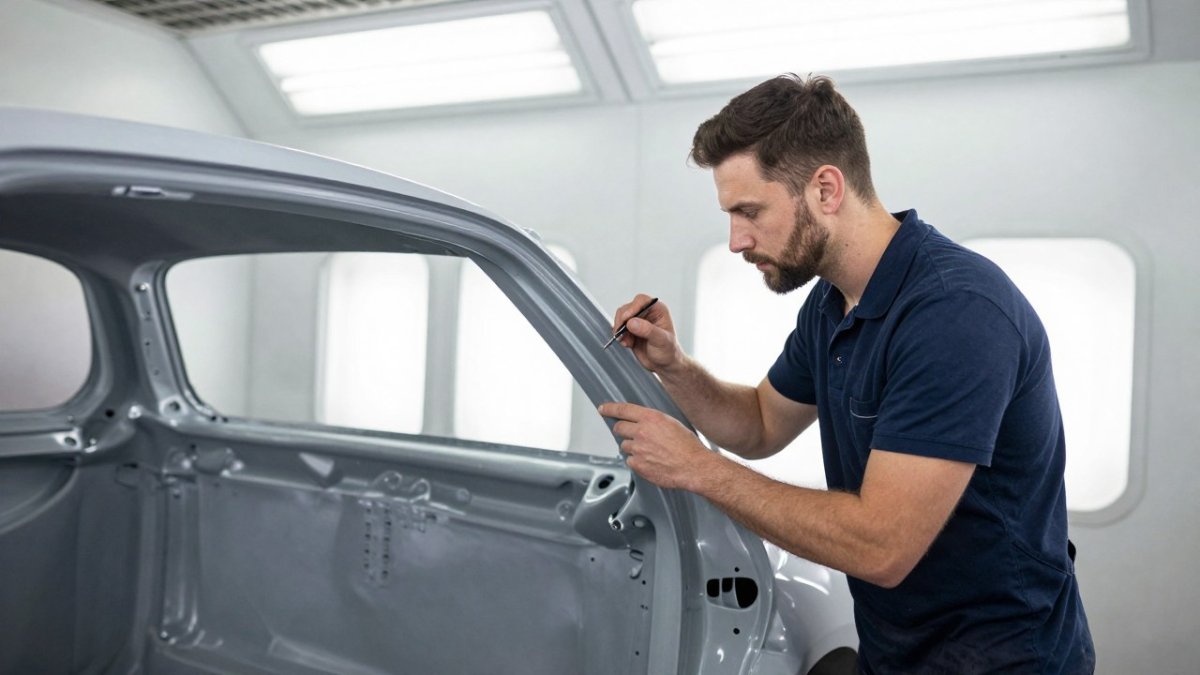
A transparent way to compare options is to build the estimate line by line:
- Surface preparation: sanding, stripping, filler, primer, seam sealer, and masking. This is where most hidden labor lives.
- Paint materials: primer, basecoat color, clearcoat, reducer, hardener, and any blend or tinting fees.
- Consumables: masking tape, paper, tack cloths, sandpaper, mixing cups, and filters.
- Booth and equipment time: spray booth rental or shop overhead, gun setup, and cleanup.
- Labor hours: bodywork, prep, spray, and reassembly, usually billed at a shop rate.
- Exclusions: jambs, door edges, engine bay, and blend panels are frequently quoted separately.
For a single panel or small repair, material cost is small and the labor minimum dominates. For a full vehicle respray, materials scale up but labor and prep scale faster. Two quotes for the same vehicle can differ considerably when they cover different scopes of work.
Watch out: a low sticker price on paint can cost more over the job if coverage is poor and the product needs an extra coat, or if a cheap clearcoat fails early and forces a repaint. Compare cost per completed job, not cost per can.
For current pricing and a quote on specific products, visit speedokote.com. For broad market context on paint prices generally, Carolina Renovation's paint price index reports a wide spread between low and high per-gallon prices, though it covers general paint rather than automotive refinish products.
Which Premium Automotive Paint Brands Are Worth Considering?
Brand names matter less than the product line within a brand. Most major refinish manufacturers sell a value, mid-grade, and premium tier, and the difference is usually resin quality, pigment strength, and clearcoat durability rather than the logo on the can. A premium basecoat under a budget clearcoat will not deliver premium results; a mid-grade basecoat under a premium clearcoat often will.
A practical way to decide is to match the product tier to the use case:
- Daily drivers and work vehicles: a mid-grade basecoat with a quality clearcoat is usually the best value. The finish needs to hold up to sun, road salt, and washing, not win a concours.
- Classic, collector, or show vehicles: premium basecoat and premium clearcoat make sense because the finish is the point, and the labor to apply it is the same either way.
- Single panels and spot repairs: match the existing finish as closely as possible. A premium product on one panel next to a mid-grade factory finish can look mismatched in gloss and texture.
- High-sun or high-abuse areas: hoods, roofs, and truck beds benefit most from a premium clearcoat with strong UV resistance.
Speedokote is a mobile refinish and bodyshop supply company. Its inventory covers fillers, primers, spray equipment, and protective coatings, so the useful question is which product line fits the job.
Watch out: mixing brands across primer, basecoat, and clearcoat can cause adhesion or compatibility problems. Most manufacturers publish a system chart, and following it is cheaper than a rework.
Choosing Paint for Your Next Project and Booking a Quote
Start with the job. Match the product grade to the finish requirement, and put the budget into surface preparation where it counts. Compare quotes on the same scope of work, including labor hours and materials.
When you are ready to buy or need a quote, Speedokote can help. Visit speedokote.com for current pricing and a quote.
Frequently Asked Questions
Is professional paint worth it for a DIY car painting project?
It depends on the project. Professional-grade paint generally offers better coverage, more consistent color matching and clearcoats designed for durability, which matter most on full-vehicle repaints. For a small touch-up or a non-visible part, a lower-cost product may be enough. Speedokote supplies professional-grade refinish products for both shops and experienced DIY painters. For current pricing, pricing depends on quantity, dates and delivery, so request a quote from Speedokote directly.
Does more expensive automotive paint last longer?
Durability depends more on the full system than on the price of the paint alone. Surface preparation, primer compatibility, the number of coats and the clearcoat all affect how long a finish holds up to weather and wear. Premium refinish systems are formulated for consistent results when applied correctly, but poor prep can shorten the life of any paint. Speedokote carries a wide range of professional refinish brands, so you can match products to your application.
